Building a sales operation for an advertising network, from zero.
Employee number 14 at an internet advertising company that went public in 1999 and was acquired the same year, where I ended up as Director of Business Development.
The situation
In 1998 Flycast was a handful of people with an idea and almost no money. Thousands of websites were drawing exploding traffic they couldn’t monetize, and advertisers had no efficient way to buy it. The company’s answer was to bundle those sites into a network and sell the audience as a package. The company was in San Francisco and I worked from Philadelphia, which meant a lot of time on planes. I was its first salesperson, and initially, my territory was the whole country.
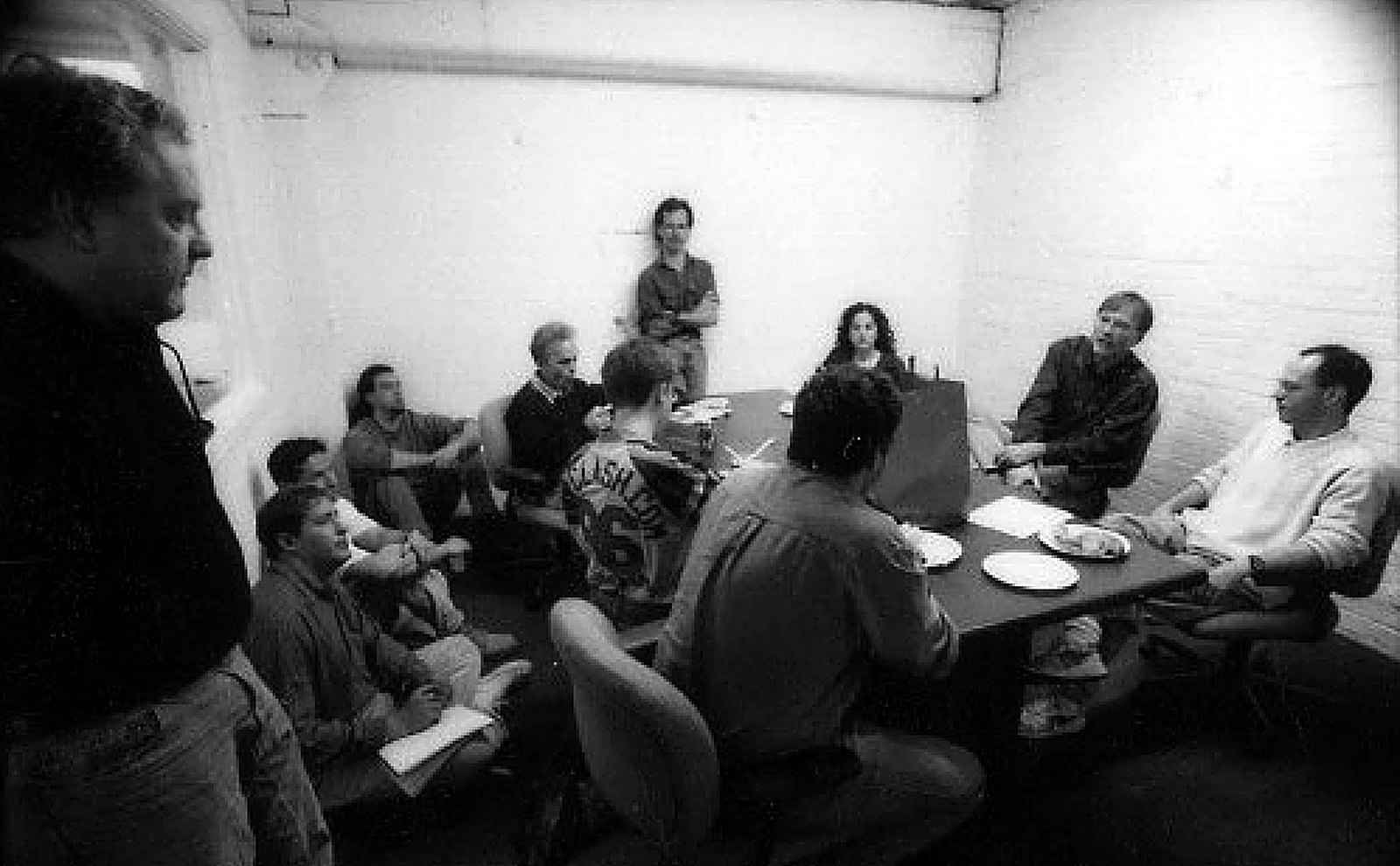
We were there before any venture funding. At one point we came within about thirty days of running out of cash. I remember standing on the loading dock with an arm around one of our salespeople, telling her that if we didn’t get a lot of money in the door fast, we would all be out of work. One of the founders, who had a Wharton MBA and had been a professional gambler in a previous life, persuaded a bank to lend us cash in exchange for a large number of warrants, and the company kept going.
What I did
I did nearly everything, starting with managing servers in a colocation center and recruiting the first sites for the network. In the early days I also met with customers, gave the presentations and helped shape the product and the marketing. As the company grew, I helped build the sales operation around it:
- The sales system. Proposal formats, presentations, monthly sales reports and revenue estimates, and a library of communication templates that let a growing team all sell the same way.
- A planning method. I helped develop a media-planning system built on an anchor site, tiers of targeted sites and a blind control. It tested banners against sites and scored each result against the plan’s average, so a buyer could see what was working — and buy more of it.
- Advice, not just sales. I recommended against spending more when it wasn’t warranted: against rich-media banners for an audience on slow connections, and against precise targeting that cost more than it was worth.
- Client service. The system ran on what was meant to be a self-serve dashboard. Our customers, nearly every ad agency in the country, needed more hand-holding than that, so we built a customer service team and the program to support them.
- The keynote. I wrote the trade-show keynote on the next generation of online marketing. It argued that value would shift from big-name sites to anonymous, behavior-based profiles, that every dollar should be accountable, and that the industry had to protect consumer privacy or invite regulation.
- New products. In July 1999 I became Director of Business Development. After the acquisition I wrote a fast-track process for developing strategic products across the parent company’s businesses: one decision-maker per stage, and learn 80% of what matters for 10% of the cost.
What I found
The sites were the real asset, and they were worth more bundled and targeted than sold one at a time. We were among the first to sell sites as a package, and among the first to target by user and by content with persistent cookies. Advertisers, though, wanted proof. Selling on measurable results, and adjusting campaigns while they ran, won more business than a better rate card.
The result
The network grew from about 500 sites and 350 million ads a month in September 1998 to more than 2,000 sites and over 3 billion ads a month by December 1999, with an independent audit of May 1999 confirming 1.17 billion ads delivered that month. The company grew to about 350 people, with offices and colocation centers in Europe and Asia as well as on both US coasts, went public in 1999 and was acquired by Engage for about $690 million in stock. At one point the CEO told the sales team to stop selling because the system couldn’t handle any more inventory.
What it shows
Most of what I do for young companies began at Flycast: find the product nobody is selling, build the machinery to sell it, and make the buying simple enough that customers keep coming back.
We should talk. Get in touch →